
On-Page SEO Audit Checklist: A Complete Step-by-Step Guide
Search engine rankings no longer depend on keywords alone. Today, Google evaluates how helpful, reliable, and user-friendly your content truly is. That’s where an On-Page SEO Audit Checklist becomes essential.
Recent Google core updates have reinforced a clear message: websites that prioritize real user value, expertise, and experience outperform those relying on outdated SEO tricks. Thin content, poor page experience, and shallow optimization no longer work.
In this guide, you’ll learn how to perform a complete on-page SEO audit step by step, using proven strategies that align with modern ranking systems. You’ll understand what to check, why it matters, and how each optimization improves visibility, engagement, and conversions.
Why On-Page SEO Matters Today
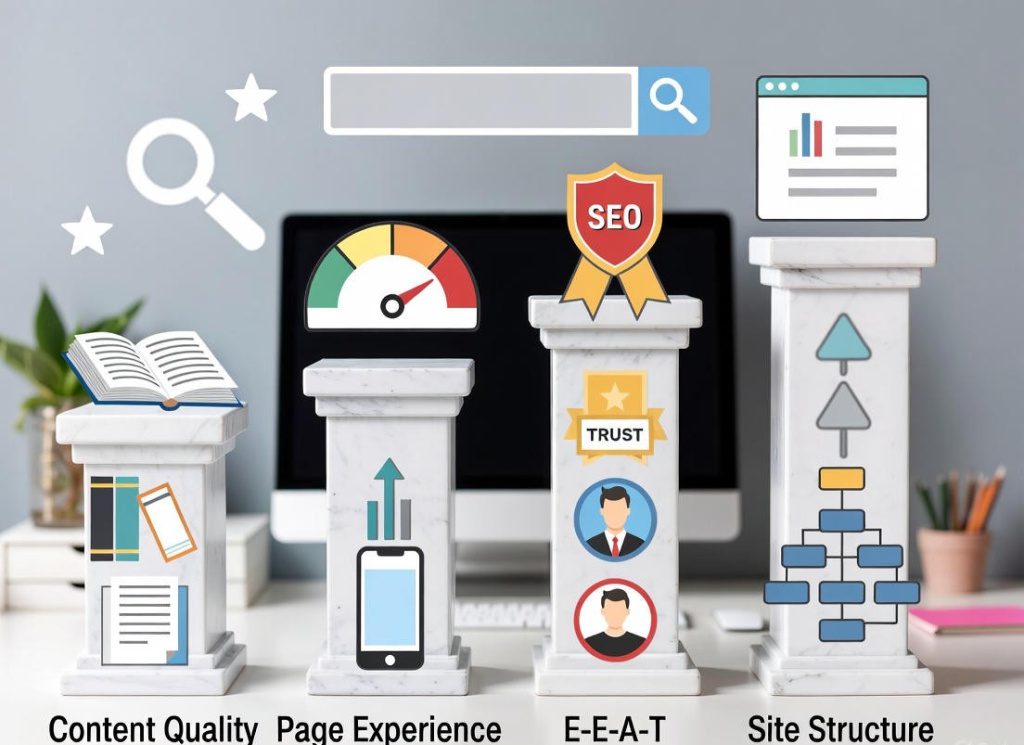
Core Pillars of Modern On-Page SEO: Content, Experience, E-E-A-T, and Structure
Google’s ranking priorities have changed significantly in recent years. Algorithm updates now focus on intent satisfaction, experience signals, and content credibility rather than keyword repetition.
Earlier, SEO success often meant placing keywords in exact locations. Today, Google evaluates how well your page solves a problem, how users interact with it, and whether the content demonstrates real expertise.
Modern on-page SEO focuses on four core pillars:
- Content quality and relevance
Pages must answer search queries thoroughly and accurately. - Page experience and Core Web Vitals
Speed, stability, and responsiveness affect rankings and engagement. - E-E-A-T signals
Content should reflect experience, expertise, authority, and trust. - Clear site structure and semantic understanding
Google needs to understand relationships between topics and pages.
Performing regular on-page SEO audits helps you:
- Maintain rankings during algorithm updates
- Improve crawlability and indexation
- Increase click-through rate and time on page
- Reduce bounce rate
- Convert visitors more effectively
On-page SEO is no longer optional—it’s foundational to improve conversions.
The Ultimate On-Page SEO Audit Checklist

Achieving SEO Success Through Regular On-Page Audits
Now let’s explore the complete checklist for auditing your website's on-page SEO.
Step 1: Crawl Your Website for SEO Issues
Why it’s important: Crawling your website helps identify SEO issues that might not be immediately visible. It allows you to discover broken links, redirect issues, or pages that are not indexed properly.
Actionable steps:
- Use tools like Google Search Console, Screaming Frog, or Ahrefs to crawl your website.
- Look for any broken links (404 errors) and internal redirection issues.
- Check the crawlability of important pages and ensure they are not blocked by robots.txt or meta tags.
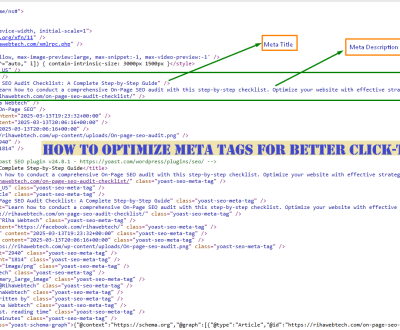
Step 2: Optimize Title Tags and Meta Descriptions
Why it’s important: Title tags and meta descriptions play a major role in determining search engine rankings and click-through rates (CTR). Properly optimized tags can lead to improved rankings and higher CTRs.
Actionable steps:
- Ensure each page has a unique title tag (under 60 characters) and meta description (under 160 characters).
- Include your target keyword in both the title and meta description.
- Write compelling copy to encourage users to click on your listing in search results.
Step 3: Review URL Structure
Why it’s important: A clean, well-structured URL is easier for search engines to index. It also enhances the user experience.
Actionable steps:
- Ensure URLs are short, descriptive, and easy to read.
- Include your primary target keywords in the URL.
- Avoid using unnecessary characters, numbers, or special symbols.
Step 4: Perform Keyword Optimization

Keyword Research Tools for Effective On-Page SEO Optimization
Why it’s important: Keywords are the foundation of SEO. Properly optimized content helps your pages rank for relevant search terms.
Actionable steps:
- Perform keyword research using tools like Google Keyword Planner or SEMrush.
- Ensure that primary keywords are placed in key areas like the title, meta description, header tags (H1, H2), and throughout the body content.
- Avoid keyword stuffing: instead, aim for the natural usage of keywords within the content.
Step 5: Optimize Header Tags (H1, H2, H3, etc.)
Why it’s important: Header tags help organize your content for readers and search engines. Proper use of header tags allows both to understand the structure of your content.
Actionable steps:
- Ensure your pages use a single H1 tag containing the main keyword.
- Use H2 and H3 tags for subheadings and ensure they logically divide your content into sections.
- Keep header tags descriptive and relevant to the content in that section.
Step 6: Check Content Quality and Length
Why it’s important: Search engines prioritize content that provides value to the user. Lengthy, high-quality content has a better chance of ranking higher in search results.
Actionable steps:
- Ensure content is high-quality, engaging, and provides value to users.
- Ensure content length is 1000+ words for in-depth coverage of the topic (for competitive keywords).
- Use clear formatting, proper headings, bullet points, and relevant keywords naturally.
Step 7: Image Optimization for SEO

Best Practices for Image Optimization in On-Page SEO
Why it’s important: Optimizing images helps with load time, which is a key factor for ranking. Alt text also makes it easier for search engines to understand the content of images.
Actionable steps:
- Ensure every image has an alt text description that contains relevant keywords.
- Compress images without sacrificing quality to reduce load time.
- Use descriptive file names that include keywords relevant to the content.
Step 8: Mobile-Friendliness and Responsiveness
Why it’s important: Google uses mobile-first indexing, meaning it predominantly uses the mobile version of your website for ranking. A mobile-friendly site is crucial for good user experience and SEO.
Actionable steps:
- Test your website on Small SEO Tools, Site Checker, SE Ranking, and Google’s Mobile-Friendly Test tool (As of December 2023, the Mobile-Friendly Test has been retired).
- Ensure that your website’s design is responsive and looks great on all screen sizes.
- Make sure mobile load times are fast, and buttons or links are easily clickable on smaller screens.
Step 9: Improve Page Speed
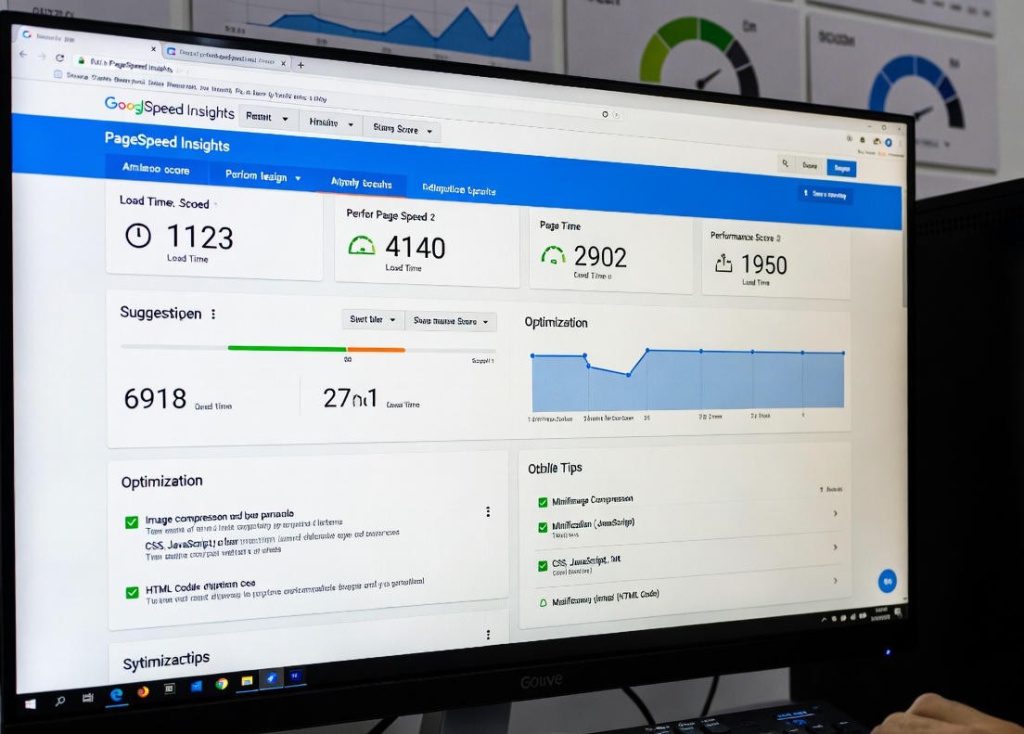
Analyzing Page Speed with Google PageSpeed Insights for SEO
Why it’s important: Page speed is a critical factor for both user experience and SEO. Faster websites tend to have higher engagement and lower bounce rates.
Actionable steps:
- Use Google PageSpeed Insights to test your website speed and receive suggestions for improvement.
- Compress large files (images, videos) to reduce loading time.
- Minify CSS, JavaScript, and HTML files.
Step 10: Internal Linking Optimization
Why it’s important: Internal links help search engines understand the structure of your website and distribute page authority across your site.
Actionable steps:
- Ensure that all important pages are linked internally.
- Use descriptive anchor text that includes relevant keywords.
- Regularly audit your website’s internal link structure to ensure it’s up-to-date and effective.
Step 11: Use of Schema Markup (Structured Data)

Implementing Schema Markup for Enhanced On-Page SEO
Why it’s important: Schema markup helps search engines understand your content in a better way, which can lead to enhanced search results like rich snippets.
Actionable steps:
- Add structured data (Schema.org markup) to your pages, such as product details, ratings, reviews, or FAQs.
- Use Google’s Structured Data Testing Tool to verify that your schema markup is correctly implemented.
Step 12: Check for Duplicate Content
Why it’s important: Duplicate content can confuse search engines and harm your rankings.
Actionable steps:
- Use tools like Copyscape to find duplicate content on your website.
- Implement canonical tags on pages that have similar content to direct search engines to the preferred page.
Step 13: User Experience & Engagement Signals
Why it matters:
User behavior influences long-term SEO performance.
Actionable steps:
- Improve readability and visual flow
- Use clear calls-to-action
- Reduce bounce rate with engaging content
- Add visuals or interactive elements
Positive engagement supports sustained rankings.
Step 14: Content Freshness & Updates
Why it matters:
Fresh content signals relevance and trust.
Actionable steps:
- Update outdated information regularly
- Refresh statistics and examples
- Improve existing pages instead of creating duplicates
Content maintenance is critical for long-term SEO success.
Conclusion: The Importance of an On-Page SEO Audit
An on-page SEO audit is an essential task for ensuring that your website is fully optimized and aligned with best practices for search engines. It helps identify and fix issues that might be preventing your website from ranking higher in search results. By following the on-page SEO audit checklist and implementing best practices for on-page optimization, you can improve your website’s ranking, visibility, and user experience.
Check out these related posts
This blog post explores the most important on-page SEO ranking factors that help improve your website’s visibility and performance in search engine results. It breaks down key elements such as keyword optimization, title tags, meta descriptions, URL structure, headings, content quality, image alt tags, internal and external linking, schema markup, mobile friendliness, site architecture, and page speed. The guide explains how optimizing each of these factors can enhance search engine visibility, improve user experience, and attract more targeted organic traffic to your site.
If you need help conducting an on-page SEO audit or need guidance on optimizing your website for better performance, contact Riha Webtech. Our team of SEO experts will help you elevate your online presence and achieve measurable results.
About us and this blog
We are a digital marketing company with a focus on helping our customers achieve great results across several key areas.
Request a free quote
We offer professional SEO services that help websites increase their organic search score drastically in order to compete for the highest rankings even when it comes to highly competitive keywords.
Subscribe to our newsletter!
More from our blog
See all posts




Recent Posts
- How to Optimize Content for AI Search Engines: (Complete Guide) March 3, 2026
- How to Install WordPress on Hostinger: A Complete Step-by-Step Guide February 26, 2026
- E-E-A-T vs. LLMs: The New Battle for Authority in the Age of AI February 19, 2026